

Monday 3 August 2026
NIHR Clinical Research Facility (CRF): Manchester is the largest and most comprehensive NIHR CRF in the UK, providing opportunities for people of all ages and backgrounds to take part in research across GM and beyond.
Hosted by Manchester University NHS Foundation Trust (MFT) in partnership with The Christie NHS Foundation Trust and Northern Care Alliance NHS Foundation Trust, our facilities are based at The Christie, Manchester Royal Infirmary, North Manchester General Hospital, Royal Manchester Children’s Hospital, Salford Royal Hospital and Wythenshawe Hospital.
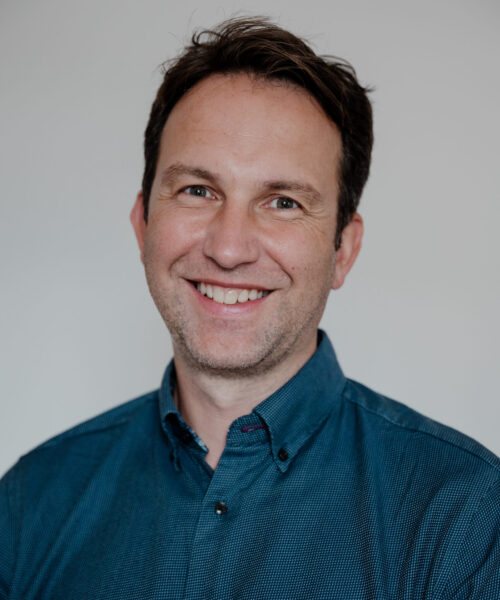
“From undertaking my PhD in the National Institute for Health and Care Research (NIHR) Clinical Research Facility (CRF): Manchester to now being its Director, I wanted to celebrate how the NIHR, through early-career collaboration and support has ultimately shaped my work and benefitted the patients and diverse communities we aim to serve.
Like many researchers at the beginning of their careers, I was driven by a desire to improve clinical outcomes, and this still inspires me today. NIHR’s emphasis on research that directly benefits patients aligned perfectly with this. I wanted to work towards patient-focused outcomes and improvements that could be embedded in real-world healthcare settings.”
The framework to nurture researchers
Since 2006, the NIHR has been driving life-changing research and innovation to improve the health and wealth of the nation, and my first touchpoint was when they funded the first year of my PhD in 2008, before an external Fellowship in 2009.
My PhD itself was hosted and facilitated entirely in the NIHR CRF: Manchester, supporting the measurement of endothelial dysfunction in lupus, a major driver of early-onset cardiovascular disease. For 3 years, the CRF provided specialist equipment, a temperature-controlled room and skilled research nurses, operational delivery, data and support colleagues to help me undertake vascular ultrasound scans on patients with lupus – and I couldn’t have done that anywhere else.
As a new consultant, I became the Academic Foundation Lead at Manchester University NHS Foundation Trust (MFT) for the NIHR’s Integrated Clinical Academic Training programme, which supports resident doctors to undertake a clinical role with protected academic time built in. I also became the training lead for the MFT-hosted NIHR Manchester Biomedical Research Centre (BRC) Musculoskeletal Theme (2017-22). This role – and the interactions with other training leads across the NIHR infrastructure – broadened my horizons around the scope of capacity building placements and leadership opportunities that the NIHR could offer.
A key strength of the NIHR is its ecosystem. Being part of an NIHR BRC environment opened the door to interdisciplinary collaboration – bringing together scientists, clinicians, data specialists, and patient partners.
In 2018, I became Medical Director for the NIHR CRF: Manchester at Manchester Royal Infirmary (MRI) and took on the training lead role for our initial 4 sites, so I was able to replicate the same development opportunities across multiple parts of the infrastructure.
Equally important is the collaborative environment NIHR fosters. Through its networks, you don’t feel like you must constantly knock on doors as they’re already open to you through the NIHR framework.

Supporting the next generation
Another valuable aspect of NIHR support is its continuity. It is not simply about one-off grants, but about nurturing researchers over time. Through successive funding streams, mentorship schemes, and access to different parts of the infrastructure, they offer structured opportunities and programmes for sustained development, and ensure talent is recognised and encouraged.
Forming the foundation of clinical academic training, support for Academic Clinical Fellowships and Academic Clinical Lecturers has been vital because there’s now a clear academic pathway for people to follow with protected research time.
Throughout my career, I’ve seen how the NIHR supports the training of clinical academics as an early researcher myself to now mentoring and supervising other academic clinical fellows and lecturers.
This interdisciplinary approach fundamentally enriches the quality and relevance of our research for real-world impact, and I was delighted to be appointed as Director of the NIHR CRF: Manchester in June 2025.
Based within 6 NHS hospitals across Greater Manchester (GM), our multidisciplinary teams deliver early-phase and complex experimental studies. We offer a range of services to help researchers and life science organisations to design and undertake clinical trials for new treatments, therapies and technologies
As Director, I see daily how the NIHR’s training, development and capacity building ambitions are benefitting so many of my colleagues, which in turn benefits our trial participants.
And for me personally, from starting my research career with the support of NIHR, I am now leading on UK-first trials for lupus and other auto-immune conditions in the same place I undertook my PhD years earlier – and still with the same goal to improve patient outcomes through research.
Looking Ahead
The healthcare landscape is continually changing and NIHR’s commitment to inclusion and accessibility is helping to broaden the voices shaping healthcare research with fresh perspectives.
Its investment in innovation, collaboration, and impact-driven research that translates into clinical practice ensures it will remain a cornerstone of the UK’s research ecosystem.
NIHR has not just funded my research, it has helped shaped my career by providing the tools, the network, and the platform. I would say to anyone working in research to seek out and pursue those pathways; these are designed to support whole careers not just projects.
Thank you to everyone who supports, contributes or takes part in our research. Research is a team effort and the more opportunities we can provide for our teams to grow and develop, the more impact we can make to people’s lives.”
Professor Ben Parker
Prof Parker had been Co-Director of the CRF since 2022 and Medical Director of the NIHR CRF: Manchester at MRI since 2018. He is also a Consultant Rheumatologist at MRI.
You can listen again to Prof Parker and Kathy, a former study participant, after they recently appeared on the BBC Radio 4 Inside Health programme. They spoke to presenter James Gallagher about how CAR-T therapy works and promising results in early studies for people with lupus.